Audience
Who will see the page or MVP and in what situation they will use it.
Describe the audience, offer, and one key action. Fluw assembles a page or a first service version you can open in the browser, show to users, and improve from feedback.
A first version is not meant to hide uncertainty. It helps you see whether people understand the offer and take the action that matters.
A landing page tests the offer and one target action: a request, sign-up, or enquiry. An MVP tests the key user journey.
A page with your content, a form, or a service screen. The first version is defined in the task, and publishing stays under your control.
Choose the signal in advance: a request, sign-up, completed journey, or useful feedback from early users.
A first version does not need a complete brand system or a long requirements document. It needs a specific audience, their problem, and the solution you want to test.
Who will see the page or MVP and in what situation they will use it.
Which problem the service solves and why someone should try it now.
A request, sign-up, completed journey, or substantive feedback.
Assemble the smallest useful version, show it to the audience, and decide what to change using the signal you selected in advance.
Define the audience, promise, and primary action.
Review the page or key MVP screens in the browser.
Let people complete one deliberate journey.
Keep what works, clarify what does not, or stop before a larger build.
For a landing page, this is a complete page with one primary action. For a web MVP, it is a small set of connected screens for the key journey. Actual demand is measured only after people use it.
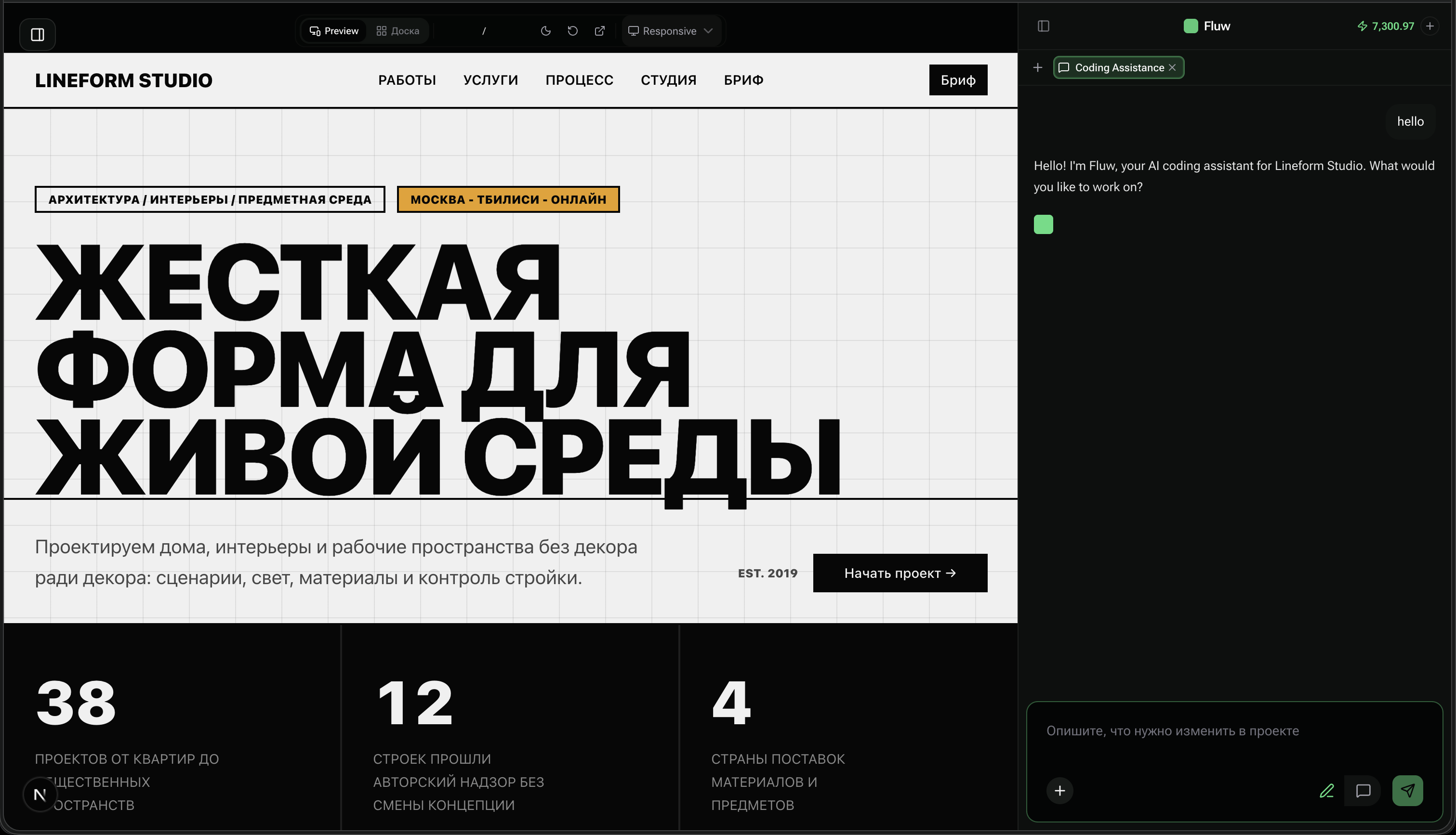
People quickly understand who the service is for and which problem it solves.
A request, sign-up, or key MVP step becomes the demand signal selected in advance.
The team sees what to clarify and whether a larger build is justified.
The offer, content, and conversion to one action: a request, sign-up, or enquiry.
The key screen flow, states, and user actions before expanding the product.
Payments, a new integration, complex permissions, and critical logic need review first.
Describe the problem, audience, and hypothesis. Fluw helps turn that description into a testable first version.
Yes. A landing page fits when you first need to test the offer and collect requests or sign-ups without a complex service.
When you need to test more than interest: the sequence of actions such as entering, choosing, sending a request, or completing another key journey.
Only after checking the specific source, permissions, and data scope. A new integration is assessed separately before launch is promised.